Saturday, August 21, 2010


Saturday, August 14, 2010
New Casio FH100 compact
I just bought a new compact - I wanted something easy to carry with a wide angle lens and after doing a little research ended up with the Casio EX FH100 with a 24 mm wide angle [ - 240mm tele ] and the ability to do high speed video .
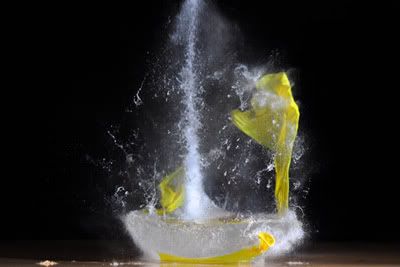
I'm really enjoying this video mode !
I'm really enjoying this video mode !
Monday, August 9, 2010
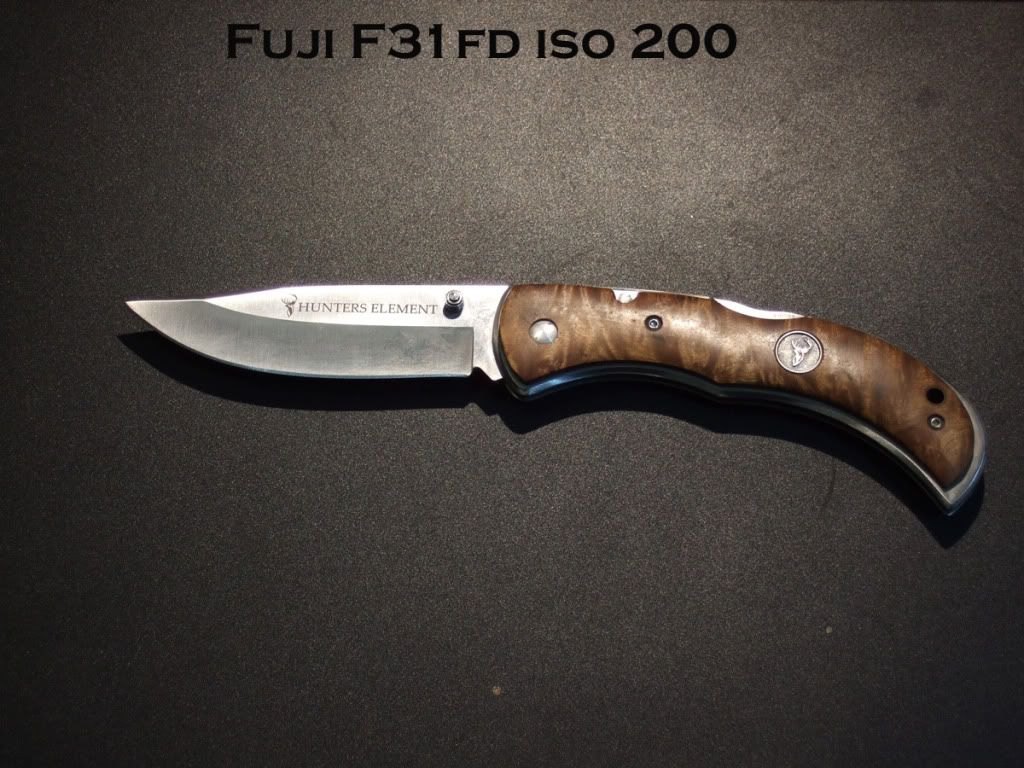
Fuji F31fd high iso samples
The last 6 meg camera made by Fuji still sets a standard for high iso from a compact . They used their brains back then and stayed at 6 meg but made a larger sensor for better light gathering .
Tonight I did some test images at varying iso's which shows why the newer 14 meg compact sensors still can't catch up - they have too many megapixels and the dots are so small they can't gather enough light at high iso's .
Unfortunately "megapixels sell" or rather "A lack of megapixels doesn't sell " so they have to keep making compacts with more megapixels because people think the bigger numbers mean better image quality and the manufacturers exploit this idea to make people think they need to replace their camera because a 'better' model with more megapixels must be better .....
These images are slightly underexposed which exaggerates their noise .


And a few with different lighting



Tonight I did some test images at varying iso's which shows why the newer 14 meg compact sensors still can't catch up - they have too many megapixels and the dots are so small they can't gather enough light at high iso's .
Unfortunately "megapixels sell" or rather "A lack of megapixels doesn't sell " so they have to keep making compacts with more megapixels because people think the bigger numbers mean better image quality and the manufacturers exploit this idea to make people think they need to replace their camera because a 'better' model with more megapixels must be better .....
These images are slightly underexposed which exaggerates their noise .
And a few with different lighting
Thursday, August 5, 2010
Nightclub photography
We all have different views on how things should be photographed - auto , manual , with flash , without flash - on camera flash , off camera flash .....
But basically whatever gets the results you want is the right way and "Jr" - 'Mike Petrie Jr' of nikoncafe has allowed me to copy and paste his thoughts and experiences on nightclub photography :

I wanna start off by saying I by no means consider myself a guru of nightclub shooting. This is just going to be some information that I've learned along the way and some of my techniques. Please feel free to contribute, ask questions or flat out disagree with me. I think this should be a good learning process for any and all involved.
Nightclubs - Starting off
Before you even step into a club, you need to be savvy with a camera. Your non-professional modes aren't going to get you far. Generally speaking, you're always or should always find yourself in manual mode. If words like aperture, shutter speed, ISO, exposure bias, etc... all seem like foreign vocabulary, I recommend picking up a few books and getting more hands on training before considering this. Understanding Exposure is a great book to start you off. The newest edition can be found on Amazon.
Equipment
Camera Body
Shooting in a dark club is difficult, walking in and using on board flash, a D40 and a kit lens may seem fine - but it's going to be a stressful night. Don't get me wrong, you can "make it work" if you know what you're doing... but your pictures are going to be noisy, flash exposure will be poor and your shots won't look very professional. The better your camera deals with noise and high ISOs, the better your pictures will be without needing to spend tons of time post editing. You don't need to be shooting FX (it wouldn't hurt) but I recommend at least using a camera that has an internal motor.
Lenses
The faster, the better. The wider, the better. For the most part, you won't be shooting wide open, but being able to work with a fixed aperture throughout the focal range makes life A LOT easier and having the capability of dialing down to f/2.8 is always a plus. If you have the itch to shoot prime, make sure it's wide. That nifty fifty won't do you much good in a tight club. I rarely even use my 35mm f/2.
*For DX cameras, I recommend something beginning around the 17mm or 18mm range. I personally shoot with a 3rd party Tamron 17-50 2.8. FX shooters, I hear the 24 - 70mm f/2.8 works wonders in the club.

Flash
Lighting is THE MOST important aspect of club photography (in my opinion). Invest in at least one flash unit. There are many different techniques for shooting clubs and utilizing Nikon lighting, but that will be covered later in the thread. For now, you need to understand that some sort of flash unit is essential.
Extras
Pick up a lens hood and a filter for your lens. I call it "the drunk guard". You'd be surprised how much that small investment will help you out in the long run from people smashing into you and spilling drinks.

The basics - Every club is different, but here are general club settings.
Shutter Speed
I tend to shoot anywhere from 1/2 - 1/40th depending on the club and effect I'm trying to achieve. Dragging the shutter is very common in clubs so that you pull the right amount of ambient light into your lens. If you shoot too fast, your subject(s) will look like they are in a dark room... that's kinda boring.

Aperture
As a general rule of thumb, when shooting with my flash unit, my aperture stays between 4.5 - 5.6 respectively. This DOES vary, but this is a nice starting ground.
ISO
More expensive Nikons handle light sensitivity better than others. I keep my D90 between 500 - 800 depending on my shutter speed. I've heard of FX users shooting much higher in their camera's ISO range.
Flash/Exposure Bias/Flash Power
Good luck. This will change every few minutes if you have a lot of strobes and are flipping from portrait to landscape style shots. There are SO man factors that play into these adjustments... the list is endless. One thing I can recommend is a diffuser.
A diffuser will soften light - the pure physics of something sitting between a light source and it's projected path will obviously scatter or hinder the light output in someway (think of clouds) and in turn will help your pictures. The biggest problem with a flash unit (on the hot shoe) is having such an intense amount of light coming from one super small area/on the same plane as your lens, so it's always going to have a little bit of the deer in headlight effect.

Now, shooting on the hot shoe is pretty normal and economical in these types of settings. I say economical because room is sometimes really tight. If you're shooting portrait on the shoe, you're going to get some type of side shadow no matter what you do. Even if you have a Gary Fong or some type of fancy shmancy diffuser, the location of the light source is still going to be coming from the side of the camera, period.
If you want to shoot with your flash in your hand, you have three options. Get yourself a TTL cord or wireless trigger and fire the flash that way. You'll still get to use your precious AF on flash assist light if it's not a slave. Another option is mounting a more expensive Nikon flash (SB 800 +) on your hot shoe and firing another flash in slave mode in your other hand. This is a great option - but a pain in a hot crowded club. Lastly, shooting Nikon commander is always an option... but you don't get to use the luxury AF assist light on your flash unit. You need to depend on the in camera illuminator. Womp Womp.
So, how do you fix harsh portrait sidelights with a single flash? Answer = flash bracket .
Post Production
Do yourself a favor, shoot in JPEG. Raw is incredible, but after thumbing through 200+ photos a night and not be able to batch process... you will be hating your job.

But basically whatever gets the results you want is the right way and "Jr" - 'Mike Petrie Jr' of nikoncafe has allowed me to copy and paste his thoughts and experiences on nightclub photography :
I wanna start off by saying I by no means consider myself a guru of nightclub shooting. This is just going to be some information that I've learned along the way and some of my techniques. Please feel free to contribute, ask questions or flat out disagree with me. I think this should be a good learning process for any and all involved.
Nightclubs - Starting off
Before you even step into a club, you need to be savvy with a camera. Your non-professional modes aren't going to get you far. Generally speaking, you're always or should always find yourself in manual mode. If words like aperture, shutter speed, ISO, exposure bias, etc... all seem like foreign vocabulary, I recommend picking up a few books and getting more hands on training before considering this. Understanding Exposure is a great book to start you off. The newest edition can be found on Amazon.
Equipment
Camera Body
Shooting in a dark club is difficult, walking in and using on board flash, a D40
and a kit lens may seem fine - but it's going to be a stressful night. Don't get me wrong, you can "make it work" if you know what you're doing... but your pictures are going to be noisy, flash exposure will be poor and your shots won't look very professional. The better your camera deals with noise and high ISOs, the better your pictures will be without needing to spend tons of time post editing. You don't need to be shooting FX (it wouldn't hurt) but I recommend at least using a camera that has an internal motor.Lenses
The faster, the better. The wider, the better. For the most part, you won't be shooting wide open, but being able to work with a fixed aperture throughout the focal range makes life A LOT easier and having the capability of dialing down to f/2.8 is always a plus. If you have the itch to shoot prime, make sure it's wide. That nifty fifty won't do you much good in a tight club. I rarely even use my 35mm f/2.
*For DX cameras, I recommend something beginning around the 17mm or 18mm range. I personally shoot with a 3rd party Tamron 17-50 2.8.
FX shooters, I hear the 24 - 70mm f/2.8 works wonders in the club.Flash
Lighting is THE MOST important aspect of club photography (in my opinion). Invest in at least one flash unit. There are many different techniques for shooting clubs and utilizing Nikon lighting, but that will be covered later in the thread. For now, you need to understand that some sort of flash unit is essential.
Extras
Pick up a lens hood and a filter for your lens. I call it "the drunk guard". You'd be surprised how much that small investment will help you out in the long run from people smashing into you and spilling drinks.
The basics - Every club is different, but here are general club settings.
Shutter Speed
I tend to shoot anywhere from 1/2 - 1/40th depending on the club and effect I'm trying to achieve. Dragging the shutter is very common in clubs so that you pull the right amount of ambient light into your lens. If you shoot too fast, your subject(s) will look like they are in a dark room... that's kinda boring.
Aperture
As a general rule of thumb, when shooting with my flash unit, my aperture stays between 4.5 - 5.6 respectively. This DOES vary, but this is a nice starting ground.
ISO
More expensive Nikons handle light sensitivity better than others. I keep my D90
between 500 - 800 depending on my shutter speed. I've heard of FX users shooting much higher in their camera's ISO range.Flash/Exposure Bias/Flash Power
Good luck. This will change every few minutes if you have a lot of strobes and are flipping from portrait to landscape style shots. There are SO man factors that play into these adjustments... the list is endless. One thing I can recommend is a diffuser.
A diffuser will soften light - the pure physics of something sitting between a light source and it's projected path will obviously scatter or hinder the light output in someway (think of clouds) and in turn will help your pictures. The biggest problem with a flash unit (on the hot shoe) is having such an intense amount of light coming from one super small area/on the same plane as your lens, so it's always going to have a little bit of the deer in headlight effect.
Now, shooting on the hot shoe is pretty normal and economical in these types of settings. I say economical because room is sometimes really tight. If you're shooting portrait on the shoe, you're going to get some type of side shadow no matter what you do. Even if you have a Gary Fong
or some type of fancy shmancy diffuser, the location of the light source is still going to be coming from the side of the camera, period.If you want to shoot with your flash in your hand, you have three options. Get yourself a TTL cord or wireless trigger and fire the flash that way. You'll still get to use your precious AF on flash assist light if it's not a slave. Another option is mounting a more expensive Nikon flash (SB 800
+) on your hot shoe and firing another flash in slave mode in your other hand. This is a great option - but a pain in a hot crowded club. Lastly, shooting Nikon commander is always an option... but you don't get to use the luxury AF assist light on your flash unit. You need to depend on the in camera illuminator. Womp Womp.So, how do you fix harsh portrait sidelights with a single flash? Answer = flash bracket
.Post Production
Do yourself a favor, shoot in JPEG. Raw is incredible, but after thumbing through 200+ photos a night and not be able to batch process... you will be hating your job.
Thursday, July 29, 2010
Subscribe to:
Posts (Atom)


 Posts

